

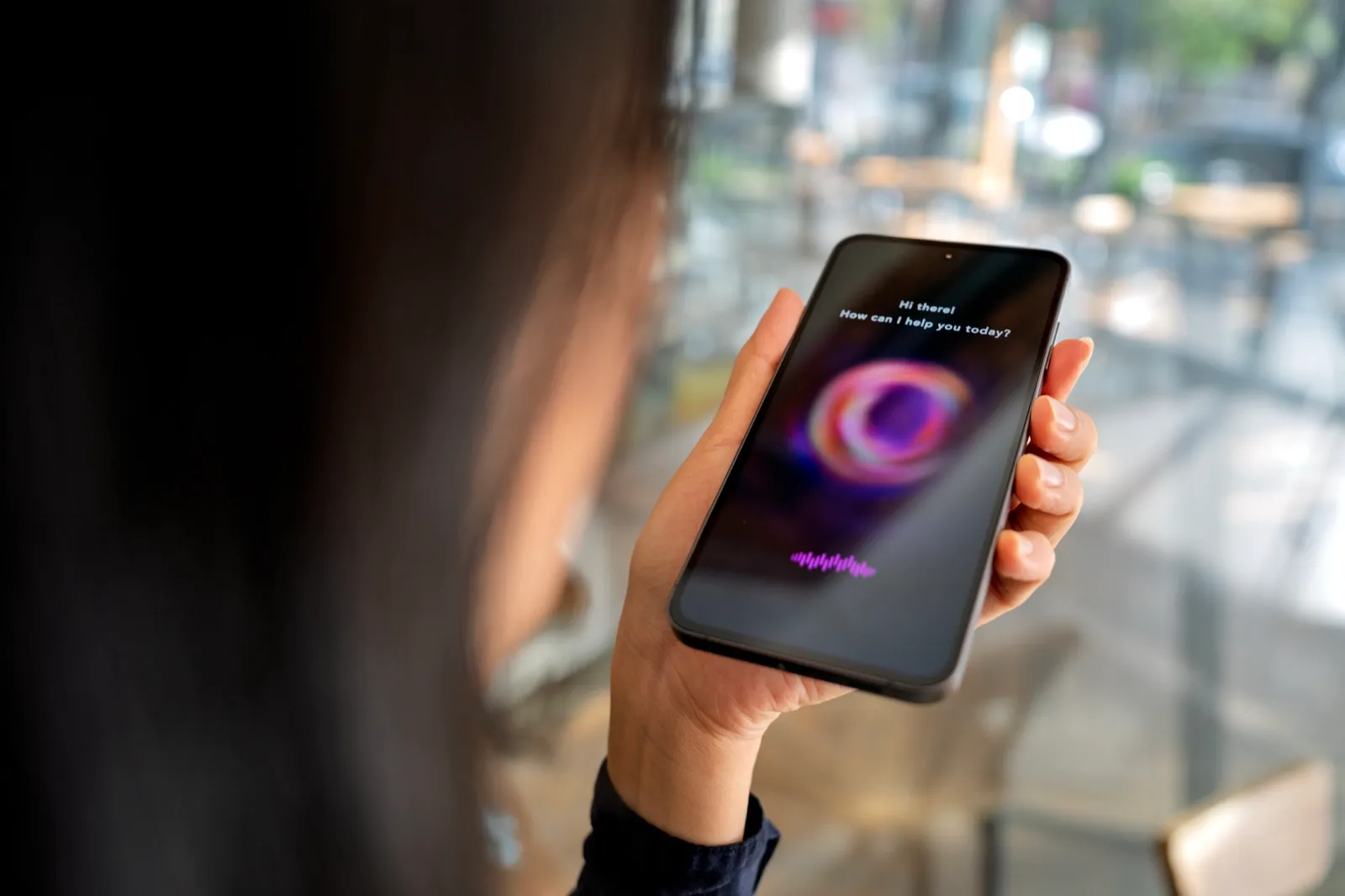
Today, that experience is changing. The arrival of technologies such as RAG (Retrieval-Augmented Generation) and MCP (Model Context Protocol) is driving a new generation of intelligent assistants capable of answering accurately, adapting to context and connecting with the company's internal information systems.
A traditional chatbot delivers preprogrammed responses within a closed decision tree. An intelligent enterprise assistant combines a language model with real-time access to the organisation's internal information, allowing it to answer with up-to-date data, trace its sources and scale without manual reprogramming. The technologies that make this leap possible are RAG and MCP.
Chatbots: the first phase of automation
Chatbots were born with a clear mission: to automate the repetitive. Answering frequently asked questions, guiding the user through basic processes or redirecting them to the right department.
Their limitations were well known. They offered preprogrammed, inflexible responses, were unable to adapt to unforeseen situations and created impersonal experiences that, in many cases, increased user frustration rather than resolving it. According to AWS, rule-based chatbots cannot function as virtual assistants because their logic depends on preconfigured scenarios: if the customer phrases the question in an unexpected way, the system fails. (Source: AWS, "What is a chatbot?")
The chatbot was useful for offloading repetitive volume, but insufficient as a complete service tool.
The leap to intelligent assistants
With advances in language models (LLMs), AI began to understand natural language better, offering more fluent and contextually accurate responses. However, LLMs on their own also had well-known limitations: they worked with static, generic knowledge, could generate incorrect answers with no real basis (the phenomenon known as hallucinations) and had no direct access to each company's up-to-date information.
That is where RAG and MCP come in, two complementary technologies that are redefining the concept of the intelligent assistant.
RAG: accuracy and context in real time
RAG (Retrieval-Augmented Generation) is the architecture that allows a language model to connect to external sources of information, such as databases, internal manuals, APIs or corporate documents, in order to answer based on real, up-to-date data instead of relying on the static knowledge it was trained on.
In practice, this means the assistant does not "remember" the answers, but rather builds them by consulting the relevant information at the moment the question is asked. According to Gartner, 78% of enterprise AI implementations in 2026 will use RAG as their main architecture, compared with 34% in 2024, precisely because it solves the problem of knowledge obsolescence that affects pre-trained models. (Source: AutoProcessX, citing Gartner, February 2026)
Its advantages applied to customer service are concrete: the assistant accesses the company's internal knowledge rather than generic information from the internet; its answers are traceable to the specific source they come from, which allows them to be audited; and the information it handles is what is current at that moment, without depending on periodic retraining.
MCP: the open standard for connecting AI and enterprise systems
MCP (Model Context Protocol) is the open source protocol that establishes a universal, secure standard for connecting AI models with multiple corporate systems: CRM, ERP, document repositories, enterprise APIs and other tools.
It was introduced by Anthropic in November 2024 and has since been adopted by OpenAI and Google DeepMind as a common standard for integrating AI with external tools. (Source: Wikipedia, "Model Context Protocol") In December 2025, Anthropic donated the protocol to the Agentic AI Foundation, co-founded with Block and OpenAI under the Linux Foundation, which reinforces its character as an open, neutral standard.
The difference from RAG is significant: whereas RAG connects the model to a knowledge base to enrich its answers, MCP defines how the model communicates with any external system and acts on it. The analogy used by both Google Cloud and Anthropic's official documentation is that MCP works like a USB-C port for AI applications: a universal connector that replaces custom integrations with a single standard. (Source: Google Cloud, "What is the Model Context Protocol?")
Its practical benefits in enterprise environments are threefold. The first is security and control: data remains within the corporate perimeter and the model consults it on demand without replicating it. The second is interoperability: an MCP integration works with any compatible model, with no need to rewrite code when switching provider. The third is scalability: adding new sources or systems is quick and follows the same standardised protocol.
The impact on customer experience
The combination of RAG and MCP turns assistants into intelligent copilots for customer service, with capabilities that traditional chatbots cannot achieve. They understand the context of each conversation, access the most recent and relevant business information, offer transparent answers traceable to their source and scale with the business without manually reprogramming each interaction.
The result is measurable: better-served users, internal teams freed from repetitive queries and a quality of service that holds up as volume grows.
From frustration to strategic value
Whereas traditional chatbots were often seen as a bureaucratic barrier, intelligent assistants become an operational asset. They reduce costs by automating complex queries that previously required human intervention. They improve service quality because they answer with the company's real information, not generic responses. They build trust because every answer can be audited and attributed to a specific source. And they free up teams' time so they can focus on tasks of greater strategic value.
At LurNova we drive this evolution
At LurNova.ai we help companies make the leap from basic chatbots to intelligent assistants powered by RAG and MCP.
We design solutions that do not just answer questions, but understand the business, consult the right information and deliver a service aligned with the reality and needs of each customer. Whether you are looking for a customer service assistant, an AI agent integrated into your internal workflows or a complete RAG solution for your corporate knowledge base, we can support you from diagnosis to go-live.
Because the future of customer service lies not in repeating answers, but in creating useful, reliable and verifiable experiences with the help of AI.

CEO of LurNova, with extensive experience in technology and digital transformation. Involved in developing technology projects and applying artificial intelligence in organisations, he combines technical knowledge with business vision.



